logo
Send Message
player background
live avator

5s
Total
0
Today
0
Total
0
Today
0
  • What would you like to know?
    Company Advantages Sample Service Certificates Logistics Service
Online Chat WhatsApp Inquiry
Auto
resolution switching...
Submission successful!
Good price  online

products details

Home > Products >
CNC Mechanical Parts
>
TIG Welding: Complete Guide for Precision Metal Fabrication

TIG Welding: Complete Guide for Precision Metal Fabrication

Detail Information
Highlight:

TIG welding guide for metal fabrication

,

precision TIG welding techniques

,

CNC mechanical parts welding guide

Product Description
TIG Welding: Complete Guide for Precision Metal Fabrication
What is TIG Welding?
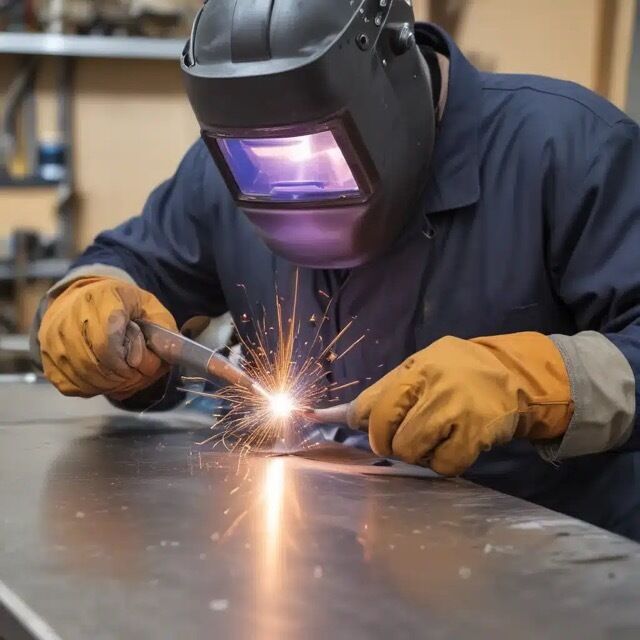
TIG (Tungsten Inert Gas) welding, also known as GTAW (Gas Tungsten Arc Welding), is a precise arc welding process that uses a non-consumable tungsten electrode to produce the weld. This method is renowned for its ability to create high-quality, clean welds on a variety of metals, making it indispensable in precision metal fabrication and CNC machining applications.
Why TIG Welding is Essential for CNC Machining
Precision and Control
TIG welding offers unparalleled control over the welding process, allowing operators to make precise adjustments to heat input and weld penetration. This precision is crucial when working with machined parts that require tight tolerances.
Clean Welds
The inert gas shield (typically argon) protects the weld pool from atmospheric contamination, resulting in clean, oxide-free welds that require minimal post-weld cleaning.
Versatility
TIG welding can be used on virtually all weldable metals, including:
  • Stainless steel
  • Aluminum
  • Titanium
  • Copper
  • Brass
  • Magnesium alloys
Aesthetic Quality
TIG welds are known for their attractive appearance, making them ideal for applications where weld aesthetics matter.
The TIG Welding Process
Equipment Required
  • TIG Welding Machine - AC/DC capability for different metals, adjustable amperage control, high-frequency start for arc initiation
  • Tungsten Electrodes - Pure tungsten (green) for AC welding, thoriated tungsten (red) for DC welding, ceriated tungsten (orange) for both AC and DC
  • Shielding Gas - Argon (most common), helium (for aluminum), argon-helium mixtures
  • Filler Rods - Matching base metal composition, various diameters for different applications
  • Welding Torch - Gas lens for better gas coverage, flexible head for access to tight spaces
Step-by-Step Process
  • Preparation - Clean metal surfaces thoroughly, remove oil, grease, and contaminants, fit up parts properly, set up welding machine parameters
  • Tungsten Preparation - Grind tungsten to a point, ensure tip is clean and sharp, insert into torch collet
  • Gas Setup - Connect gas cylinder, set proper flow rate (typically 15-20 CFH), check for gas leaks
  • Strike the Arc - Use high-frequency start, maintain proper arc length (1.5-3mm), establish weld pool
  • Add Filler Metal - Feed filler rod into weld pool, maintain consistent travel speed, control heat input
  • Post-Weld - Allow proper cooling, remove any discoloration, inspect weld quality
TIG Welding Techniques
Forehand Technique
Push the torch away from the weld pool, provides better visibility, reduces penetration, ideal for thin materials.
Backhand Technique
Pull the torch toward the weld pool, increases penetration, better for thicker materials, requires more skill.
Pulsed TIG Welding
Alternates between high and low current, reduces heat input, improves weld quality, ideal for thin materials and heat-sensitive applications.
Common Applications in CNC Machining
  • Assembly of Machined Components - TIG welding is often used to assemble precision-machined components into final products, maintaining the tight tolerances achieved during machining.
  • Repair and Modification - When machined parts require repair or modification, TIG welding provides the precision needed to maintain dimensional accuracy.
  • Custom Fabrication - For custom projects that combine machined and welded components, TIG welding ensures the welded portions match the quality of the machined parts.
  • Prototype Development - During prototyping, TIG welding allows for quick modifications and adjustments to machined parts.
Material-Specific Considerations
Stainless Steel
  • Use DC electrode negative (DCEN)
  • Argon shielding gas
  • Lower amperage than carbon steel
  • Faster travel speed
  • Back purging for thick sections
Aluminum
  • Use AC current
  • Pure tungsten or zirconiated tungsten
  • Higher amperage than steel
  • Argon or argon-helium mixture
  • Clean thoroughly before welding
Titanium
  • Use DCEN
  • High-purity argon
  • Extensive gas coverage
  • Low heat input
  • Strict cleanliness required
Carbon Steel
  • Use DCEN
  • Argon or argon-CO2 mixture
  • Moderate amperage
  • Standard cleaning procedures
TIG Welding vs. Other Welding Processes
Feature TIG Welding MIG Welding Stick Welding
Precision Excellent Good Fair
Speed Slow Fast Moderate
Skill Level High Moderate Moderate
Cost High Moderate Low
Versatility Excellent Good Fair
Weld Quality Excellent Good Fair
Thin Materials Excellent Good Poor
Common TIG Welding Problems and Solutions
1. Porosity
Cause: Contamination or gas shielding issues
Solution: Clean surfaces thoroughly, check gas flow, use proper gas coverage
2. Tungsten Inclusion
Cause: Tungsten touching the weld pool
Solution: Maintain proper arc length, use proper tungsten preparation
3. Lack of Fusion
Cause: Insufficient heat input
Solution: Increase amperage, reduce travel speed
4. Distortion
Cause: Excessive heat input
Solution: Use proper sequence, employ clamping, reduce amperage
5. Cracking
Cause: Rapid cooling or improper filler metal
Solution: Control cooling rate, use proper filler metal, preheat if necessary
Safety Considerations
Personal Protective Equipment (PPE)
  • Welding helmet with proper shade
  • Flame-resistant clothing
  • Leather gloves
  • Safety glasses
  • Respiratory protection (if needed)
Ventilation
  • Ensure adequate ventilation
  • Use local exhaust ventilation for confined spaces
  • Monitor for toxic fumes
Electrical Safety
  • Inspect equipment regularly
  • Use proper grounding
  • Keep work area dry
  • Follow electrical safety procedures
Fire Safety
  • Keep fire extinguisher nearby
  • Remove flammable materials
  • Use welding blankets
  • Monitor for sparks
Quality Control and Inspection
Visual Inspection
  • Check for uniformity
  • Look for defects
  • Verify weld size
  • Assess appearance
Destructive Testing
  • Tensile testing
  • Bend testing
  • Impact testing
  • Hardness testing
Non-Destructive Testing (NDT)
  • Radiographic testing (X-ray)
  • Ultrasonic testing
  • Magnetic particle inspection
  • Liquid penetrant inspection
Tips for Better TIG Welds
  • Clean, Clean, Clean - Cleanliness is crucial for TIG welding, remove all contaminants before welding
  • Maintain Proper Arc Length - Keep arc length consistent, too long: unstable arc, poor penetration, too short: tungsten contamination
  • Control Heat Input - Use appropriate amperage, adjust travel speed, consider pulsed welding
  • Use Proper Filler Metal - Match filler to base metal, use correct diameter, feed smoothly and consistently
  • Practice Proper Technique - Maintain steady hand, use proper body position, develop muscle memory
Advanced TIG Welding Techniques
Orbital TIG Welding - Automated TIG welding for pipe and tube applications, providing consistent, high-quality welds.
Hot Wire TIG Welding - Adds preheated filler wire to increase deposition rate while maintaining TIG quality.
Keyhole TIG Welding - Uses higher current to create a keyhole through the material, enabling single-pass welding of thicker materials.
Cost Considerations
  • Equipment Costs - TIG welding machine: $500-$5,000+, torch assembly: $200-$500, gas cylinder: $100-$300, consumables: $50-$200/month
  • Labor Costs - Higher skill requirement, slower process, higher labor costs per weld
  • Quality Benefits - Reduced rework, less post-weld processing, higher customer satisfaction, better product performance
Getting Started with TIG Welding
  • Training - Take a welding course, practice on scrap metal, learn from experienced welders, start with simple projects
  • Equipment Selection - Choose appropriate machine, select proper tungsten, get quality consumables, invest in good safety equipment
  • Practice - Start with basic joints, work on different materials, develop consistent technique, build confidence
Why Choose CNC Mechanical Part for TIG Welding Services?
  • Expertise - Our certified welders have years of experience in TIG welding for precision applications.
  • Quality - We maintain strict quality standards and provide inspection reports for all welded assemblies.
  • Equipment - We use state-of-the-art TIG welding equipment for consistent, high-quality results.
  • Integration - Our welding services integrate seamlessly with our CNC machining capabilities.
  • Support - Our team provides technical support and guidance throughout your project.
Conclusion
TIG welding is an essential process in precision metal fabrication and CNC machining. Its ability to produce high-quality, precise welds makes it invaluable for applications where quality and accuracy are paramount.
Whether you need TIG welding for prototype development, production manufacturing, or repair services, CNC Mechanical Part has the expertise and equipment to meet your needs.
Contact Us Today
Discuss your TIG welding requirements and learn how we can help you achieve superior results.