
5s
+1
Submission successful!

|
After CNC machining, parts often require surface finishing to achieve specific aesthetic, functional, or protective properties. Surface finishing is a critical post-processing step that can dramatically improve the appearance, durability, and performance of machined parts.
This comprehensive guide explores the various surface finishing options available for CNC machined parts, helping you choose the right finish for your specific application.
What is Anodizing?
Anodizing is an electrochemical process that converts the metal surface into a durable, corrosion-resistant, anodic oxide finish. Primarily used for aluminum, but can be applied to titanium and magnesium.
Type I (Chromic Acid Anodizing)
Type II (Sulfuric Acid Anodizing)
Type III (Hard Anodizing)
What is Powder Coating?
Powder coating is a dry finishing process where finely ground particles of pigment and resin are electrostatically charged and sprayed onto the part, then cured under heat to form a hard finish.
Electroplating
Electroplating uses electrical current to reduce dissolved metal cations, forming a thin metal coating on the part.
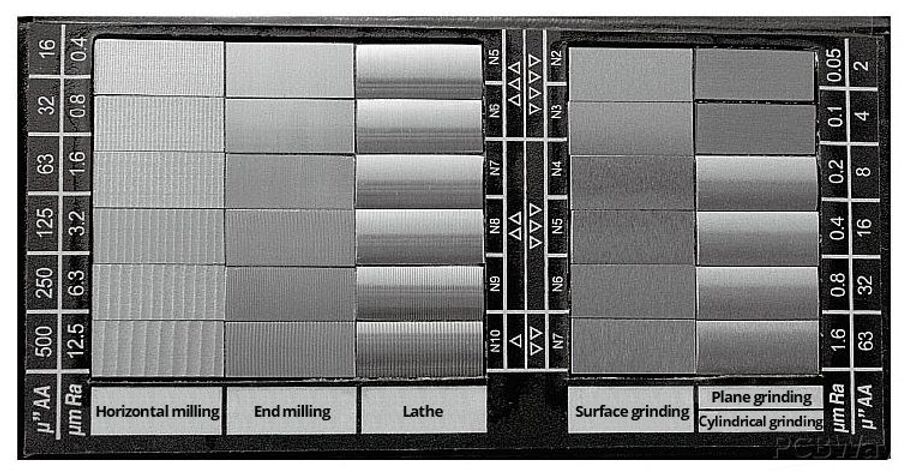
Surface roughness is measured in microinches (µin) or micrometers (µm).
| Ra Value | Description |
|---|---|
| 125 Ra | Standard machined finish |
| 63 Ra | Smooth machined finish |
| 32 Ra | Precision machined finish |
| 16 Ra | Fine finish |
| Industry | Requirements | Recommended Finishes |
|---|---|---|
| Aerospace | Lightweight, corrosion resistant, durable | Anodizing (Type II or III), Chemical Film, Powder Coating |
| Medical | Biocompatible, sterile, corrosion resistant | Passivation, Electropolishing, Anodizing |
Surface finishing is a critical aspect of CNC machining that can significantly enhance the appearance, performance, and durability of machined parts. By understanding the various finishing options and their applications, you can select the right finish for your specific needs.
At CNC Mechanical Part, we combine finishing expertise, quality processes, and commitment to excellence to deliver superior results. Whether you need basic finishing or specialized coatings, we're here to help you achieve your goals.
Contact us today to discuss your surface finishing requirements and learn how we can help you create the perfect finish for your parts.
video
video
video
video
video
Address
Factory 1: No.7,Mingzhu 2 road,Shebei,Huangjiang,Dongguan,Guangdong,China 523752 Factory 2: No.19,Mingzhu 1 road,Shebei,Huangjiang,Dongguan,Guangdong,China 523752
Tel
86-769-83391025-8005


 english
 français
 Deutsch
 Italiano
 Русский
 Español
 português
 Nederlandse
 ελληνικά
 日本語
日本語
 한국
한국
 العربية
 हिन्दी
 Türkçe
 indonesia
 tiếng Việt
 ไทย
ไทย
 বাংলা
বাংলা
 فارسی
فارسی
 polski